Loading...
Serving Imperial Beach, CA and surrounding areas. (619) 853-8277
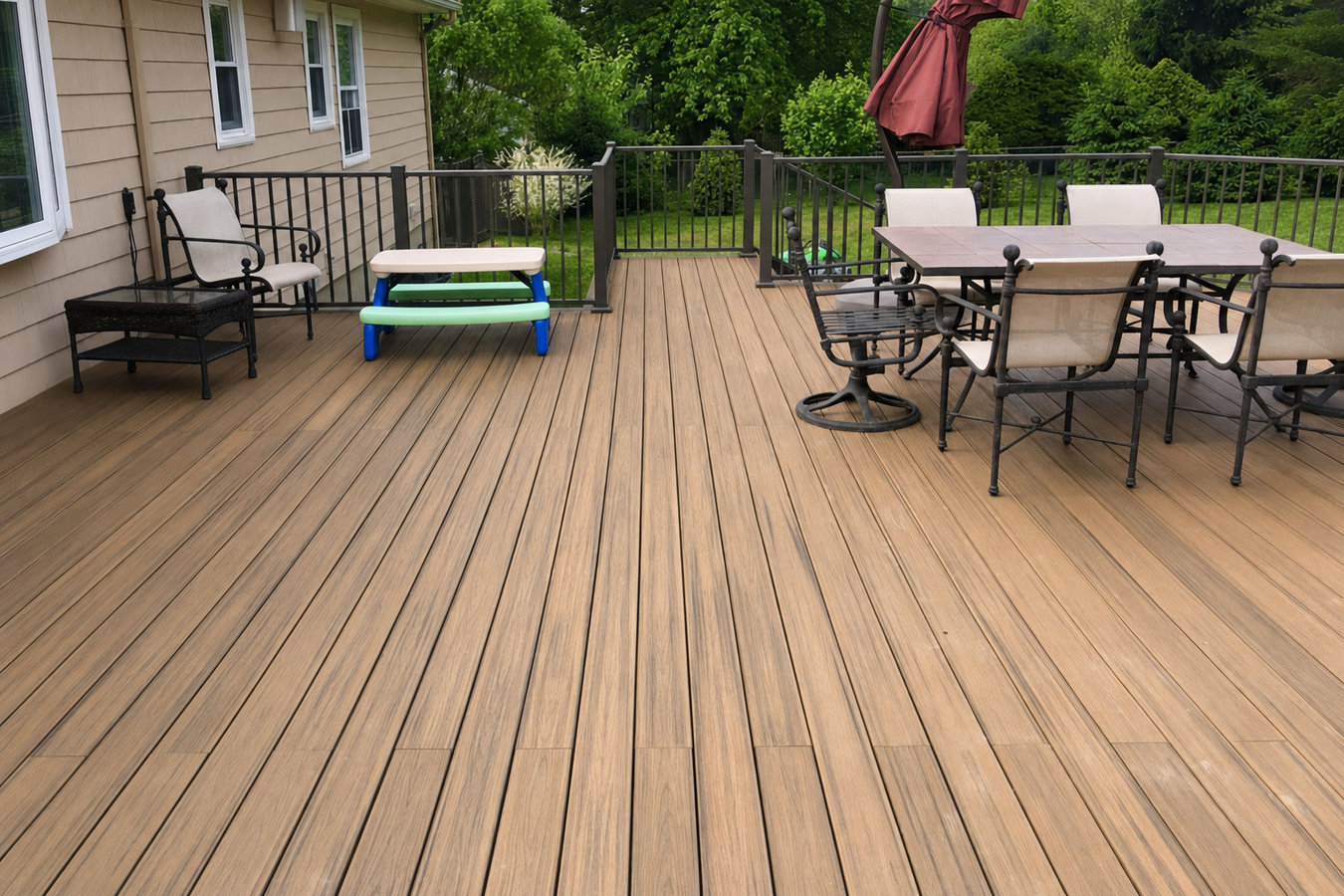
Stop spending weekends on deck maintenance. Composite decking holds up against salt air, never needs staining, and comes with warranties most wood decks cannot match.
Composite deck installation in Imperial Beach means replacing a high-maintenance wood surface with boards made from a blend of wood fiber and recycled plastic - most composite decks last 25 to 30 years, require no annual staining or sealing, and handle the salt-air environment significantly better than standard pressure-treated lumber.
Imperial Beach homeowners who are tired of repainting, re-staining, or replacing rotted boards every few years are the ones who call us most often for composite installs. The climate here is genuinely mild, which means a well-built deck gets heavy use - and heavy use on a wood deck means constant upkeep. Composite boards change that equation completely. If you want to compare options side by side, our page on Trex deck installation covers one of the most popular composite brands in detail.
The structural frame of a composite deck - the posts, beams, and joists - is still built from pressure-treated lumber. The composite boards are then fastened on top of that frame, often using hidden clips so no screw heads show on the surface. This gives you the look of a clean, uniform deck surface with the strength of a traditional wood frame underneath.
Soft spots when you walk across the deck, or boards visibly cracking and splintering, mean the wood has broken down past the point of simple repair. In a coastal environment like Imperial Beach, wood decks deteriorate faster than average because salt air and moisture work on them constantly. Composite is a long-term fix that will not put you back in the same situation in five years.
Rust streaks down from screws or along board edges mean the original fasteners were not rated for a coastal environment. This is a common problem in Imperial Beach, where the salt air is relentless. It is often a signal the whole deck was built without coastal conditions in mind, and a full replacement with properly specified materials is worth considering.
A deck that moves when you walk on it has a structural problem, not just a surface problem. This can happen when the frame was not built to handle the load, or when footings have shifted in sandy coastal soil. This is a safety issue and should be evaluated by a professional before anyone uses the deck again.
If you have been staining, sealing, or replacing boards on a wood deck every year or two and it still looks worn, you are on a treadmill that composite decking gets you off permanently. The upfront cost of composite is higher, but most Imperial Beach homeowners find it pays for itself once they stop factoring in annual maintenance costs.
We install composite decking from leading manufacturers on new builds and replacements alike. Every project starts with a proper pressure-treated frame - correctly spaced joists are critical, because composite boards flex more than wood if the framing underneath is too far apart. We use stainless steel or hot-dipped galvanized hardware throughout, which is the spec that actually holds up in a coastal environment. For homeowners who want to complement a new composite deck with matching railings, deck railing installation is a natural pairing - we handle both in a single project to keep scheduling simple.
We handle the full permit process with the City of Imperial Beach's building department. For composite deck projects, that means submitting complete architectural drawings, attending any required inspections during framing, and scheduling the final city sign-off. You receive a copy of the closed permit when the job is done - that document protects you when you sell the home.
New decks built from scratch with a proper frame and composite surface. Designed around your yard and permit requirements.
Swap out a worn or rotted wood deck surface for composite boards, either on the existing frame or a new one where needed.
Boards with a protective outer shell that resists heat, staining, and fading - a good choice for sunny Imperial Beach yards.
Clips installed between boards so no screw heads are visible on the surface, giving the deck a clean, finished appearance.
Composite or aluminum rail systems that coordinate with the deck surface and hold up in salt air without rusting or peeling.
We submit all paperwork to the city, attend every inspection, and hand you the closed permit at project completion.
Imperial Beach is right on the Pacific Ocean, and the salt in the air accelerates rust and corrosion on metal fasteners, screws, and hardware faster than homeowners expect. Standard fasteners - the kind used on most inland jobs - will rust and leave stains down your deck boards within a couple of years in this environment. Every composite deck we build in Imperial Beach uses stainless steel or hot-dipped galvanized hardware throughout - not as an upgrade, but as the baseline. The soil in much of Imperial Beach is also sandy and less stable than inland clay, which means footings need to be dug deeper and sized correctly to prevent the deck from shifting over time.
The mild, year-round climate here means composite decks get used far more often than they would in colder parts of the country - which is exactly why the investment makes sense. We serve homeowners throughout Imperial Beach and the surrounding area, including Otay Ranch and Chula Vista, where composite decking is increasingly the default choice for homeowners who want outdoor living space without the upkeep.
You reach out by phone or contact form and describe the project. We ask about the deck size, whether it is attached to the house, and any HOA requirements you know of. We respond within 1 business day and schedule a free on-site estimate - the only way to give you an accurate number.
Once you agree on a design and sign a contract, we submit the permit application to the City of Imperial Beach. Permit review typically takes a few weeks - we keep you updated while you wait. Use this time to finalize board colors, railing styles, or any add-ons.
The first day or two of construction focuses on the bones - setting footings in the ground, installing posts and beams, and building the frame. The framing is the most important part of the build. If you are curious, ask us to walk you through it before the composite boards go on top.
Once the frame passes inspection, the composite boards go down, followed by railings, stairs, and trim. The city inspector comes out for the final sign-off - we schedule that step. You receive a copy of the closed permit and a walkthrough of the finished deck before we leave.
We respond within 1 business day. No obligation, no pressure - just an honest conversation about your project and a written quote after we see your yard. Someone from our office will call to schedule a convenient time.
(619) 853-8277We use stainless steel or hot-dipped galvanized fasteners on every coastal project - not as an option you have to ask for, but as our standard practice. The right hardware prevents the rust streaks that ruin the look of a deck built with standard inland-spec screws.
We submit every permit application, attend every inspection, and hand you the closed permit at project completion. A deck built without a permit can stall a home sale or void insurance coverage - we make sure that risk never applies to your project.
Imperial Beach's sandy coastal soil requires footings sized and dug correctly to prevent settling over time. We have been building decks in this area since 2016 and know what the ground here actually requires - an important detail that out-of-area contractors routinely underestimate.
Our estimates cover labor, materials, permit fees, and cleanup before you sign anything. We do not give ballpark numbers that climb once the work starts. You will know exactly what you are paying before anyone picks up a tool.
Composite decking is a real investment, and the details matter - the right hardware, the right frame spacing, and the right footings for coastal soil are what separate a deck that lasts 30 years from one that needs work in five. You can read more about composite material performance from the North American Deck and Railing Association, an industry organization that publishes consumer guidance on decking materials and construction standards.
Trex is one of the most widely specified composite decking brands - this page covers Trex-specific products, board profiles, and why it is a strong fit for coastal Southern California yards.
Learn MoreComposite and aluminum railing systems that coordinate with your new deck surface and hold up in salt air without peeling, rusting, or requiring painting.
Learn MoreComposite boards installed this season means no sanding, no staining, and no board replacements for years - call today to get your estimate on the calendar.